
Keeping Mauritania Moving: the Role of Climate Resilience in Protecting its Roads
From persistent sandstorms in the north to seasonal rainfall and runoff in the south, Mauritania’s road network faces very different climate pressures across the country. For Cheikhna Ould Gaouad, Mauritania’s Focal Point for the MURUNAMed project, building resilience means understanding those local realities — and ensuring they are considered much earlier in the decisions that shape transport infrastructure.
Transport infrastructure is a long-term investment. Roads built today will be expected to serve communities and support economic activity for decades. But in Mauritania, they must also contend with a challenging and highly varied natural environment.
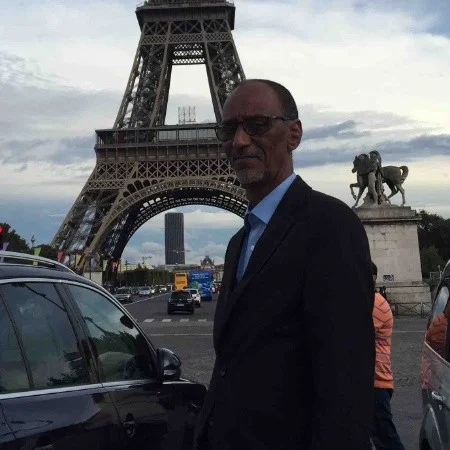
In the north of the country, strong winds and recurring sandstorms can affect roads and traffic. Further south and south-east, rainfall and runoff can damage road infrastructure and cause disruption. National and departmental roads are particularly exposed to these different hazards.
For Mauritania’s MURUNAMed Focal Point, Mr Ould Gaouad, these are not abstract future risks. They already influence how roads are operated and maintained, with keeping traffic moving remaining a constant priority.
That makes climate resilience not only an engineering question, but also a question of planning: how can Mauritania continue to develop its transport infrastructure while ensuring that investments made today can withstand the conditions they will face tomorrow?
One country, different climate risks
Mauritania’s experience illustrates why climate adaptation cannot follow a one-size-fits-all approach.
In the north, roads are particularly exposed to wind and sandstorms. In southern and south-eastern parts of the country, rainfall and runoff present a different set of risks, accelerating road deterioration and, in some areas, causing damage associated with the movement of water and soil.
The distinction matters. Different hazards require different responses, and those responses need to be considered in relation to the specific geography of each road or corridor.
Seasonal rains make that vulnerability particularly visible. According to Mr Ould Gaouad, heavy rainfall can cut roads and disrupt traffic along important routes, including the Nouakchott–Boutilimit–Aleg–Boghé axis and the Route de l’Espoir — the country’s main east–west road connecting Nouakchott with Néma.
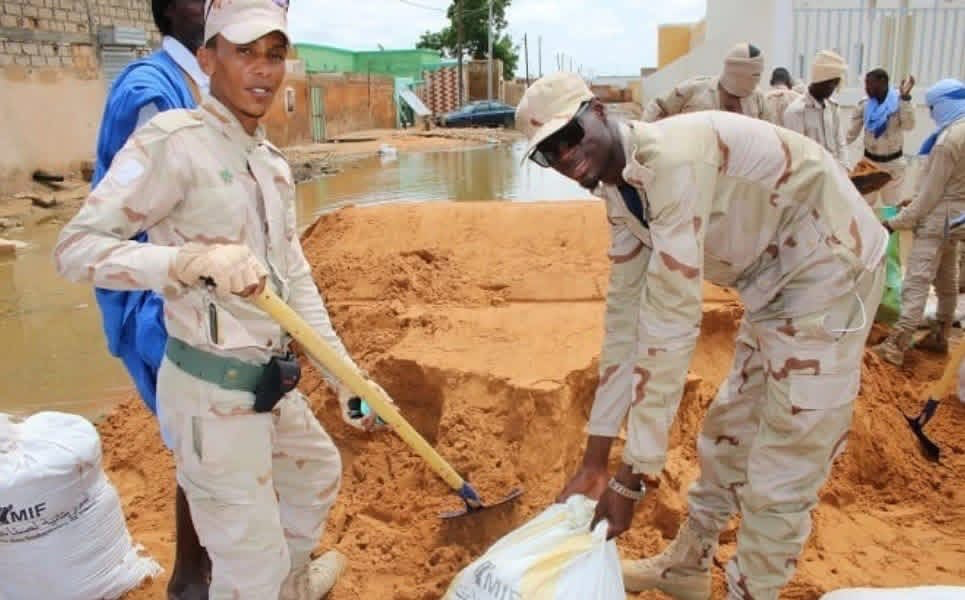
Recent rainy seasons illustrate the challenge. In 2024, flooding paralysed traffic on a section of the Route de l’Espoir west of Aioun, while runoff damaged paved roads and road embankments in other parts of the country. Torrential rains in Gorgol also washed away part of a bridge on the road between Lexeiba and Azgueilem. In some locations, flooding can leave roads temporarily impassable, isolate communities and interrupt journeys for hours or even days.
The wider effects of severe rainfall can be substantial. During major flooding in 2022, more than 3,800 homes were destroyed across affected regions of Mauritania, alongside damage to roads, bridges, dams and protective dikes.
For Mr Ould Gaouad, the effects are visible first-hand. Travelling regularly along the Nouakchott–Nouadhibou corridor, he has experienced winds and storms that restrict the flow of traffic. On the Nouakchott–Néma corridor, disruption becomes particularly significant during rainy periods — periods that can also coincide with domestic holiday travel.
These experiences underline a central principle of climate resilience: understanding risk begins with understanding what actually happens on the ground
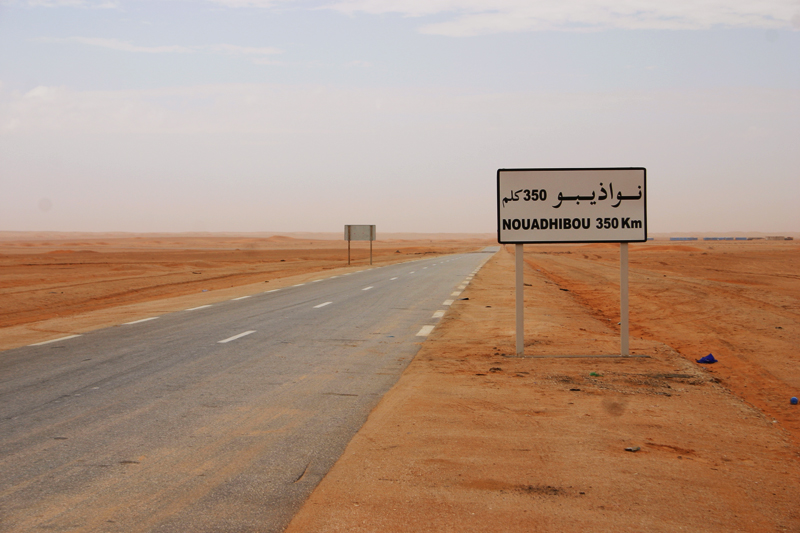
The Focal Point as a bridge
Connecting national experience with broader regional learning lies at the core of the Focal Point’s role in MURUNAMed.
Climate resilience involves many institutions. Transport authorities bring knowledge of infrastructure and operations. Environmental authorities bring expertise on climate and environmental impacts. Researchers and technical specialists contribute data and analysis. Local actors understand how disruption affects particular places and communities.
Bringing those perspectives together is essential.
For Mr Ould Gaouad, coordination is especially important at government level. One practical priority is ensuring that the department responsible for the environment becomes more closely involved in the studies carried out before road construction begins.
This is where the role of a national Focal Point can be particularly valuable: helping connect the objectives of a regional initiative with national institutions, priorities and experiences, while ensuring that lessons from Mauritania can also contribute to exchanges with other countries.
Rather than treating climate resilience as a separate issue to address once infrastructure has already been designed, the aim is to bring it into the conversation earlier.
Designing resilience in from the beginning
For Mauritania, one of the clearest opportunities is at the planning stage.
Mr Ould Gaouad argues that climate resilience should be better integrated into environmental impact assessments and that infrastructure works should be adapted more closely to specific geographical conditions. One of the principal barriers today is that climate-related considerations are not always sufficiently incorporated into the preliminary studies undertaken before infrastructure construction begins.
That changes the question from How do we repair a road after it has been affected? to How can we reduce its vulnerability before it is built or rehabilitated?
For a road exposed to recurring sand encroachment, that could mean considering the local risk from the earliest design stages. For infrastructure exposed to rainfall and runoff, it means ensuring that studies properly reflect how water is likely to affect the road and its surroundings.
The objective is prevention rather than repeated reaction.
And in a sector where infrastructure requires substantial public investment, prevention also has a strong economic rationale.
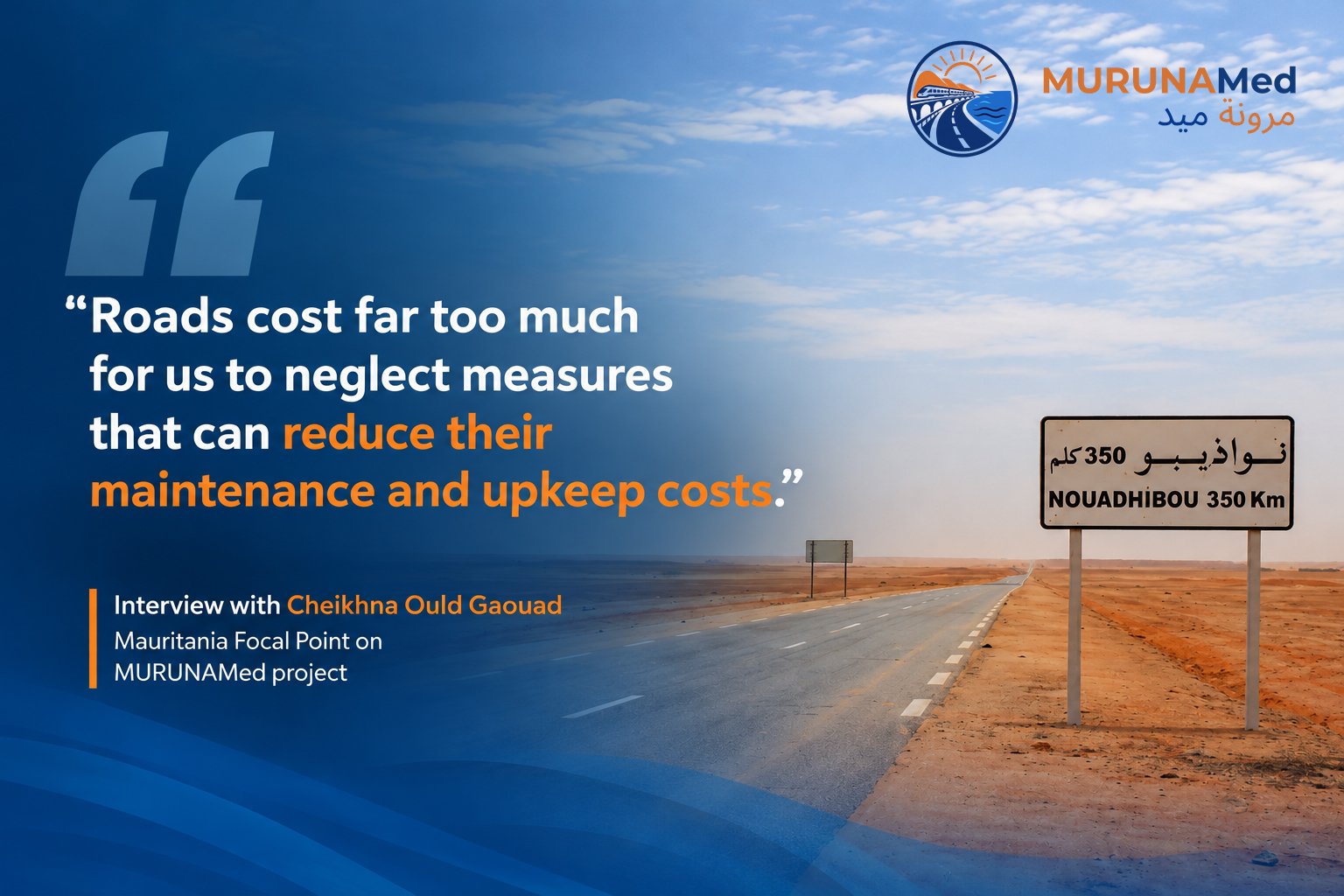
As Mr Ould Gaouad puts it: “Roads cost far too much for us to neglect measures that can reduce their maintenance and upkeep costs.”
Source: Ben Habib (Facebook)
Better information, better decisions
Planning for those risks also depends on knowing where they are and how significant they may become.
Asked about the importance of better data, vulnerability assessments and climate-risk mapping for decision-makers, Mr Ould Gaouad describes their potential role simply: “major.”
Better information can help move resilience from a general objective to something that can be incorporated into individual investment decisions.
Which corridors are most exposed to sandstorms? Where is rainfall most likely to damage infrastructure? Which road sections experience recurring disruption? And where would preventive measures have the greatest impact on future maintenance and reliability?
The recurring disruption along parts of the Route de l’Espoir illustrates why this information matters. Identifying where floodwaters repeatedly cross roads, undermine embankments or interrupt traffic can help authorities target preventive measures and incorporate those risks into future rehabilitation and maintenance decisions.
Embedding that kind of information into early-stage studies would allow climate risk to become one of the factors shaping infrastructure design, rather than an issue considered only after disruption occurs.
Learning across borders
Mauritania’s climate challenges have distinctive local characteristics, yet many of them mirror those faced by other countries across the Mediterranean.
For Mr Ould Gaouad, this creates a clear opportunity for cooperation through training and the exchange of practical experience.
The focus should be on concrete problems: approaches to sand encroachment, responses to severe weather, and measures to reduce damage associated with rainfall and runoff. Through MURUNAMed, experience from countries facing similar risks can be shared rather than developed in isolation.
This exchange works in both directions.
Mauritania can learn from measures tested elsewhere, while its own experience of managing roads exposed to prolonged periods of wind and sand can contribute to the wider regional discussion.
For the Focal Point, that means connecting local needs with regional expertise: identifying the issues that matter most nationally and helping ensure that cooperation, capacity-building and knowledge exchange respond to those realities.
A practical ambition for 2028
By the end of MURUNAMed in 2028, Mr Ould Gaouad would hopes to see a tangible shift in how road projects are prepared in Mauritania: feasibility studies for the construction and rehabilitation of roads should proactively take climate hazards into account.
It is a practical objective, but potentially an important one.
If climate risk becomes part of the earliest studies, it can influence design choices before construction begins. If environmental authorities are involved sooner, their expertise can inform those decisions. If better data and risk assessments are available, investments can respond more precisely to the challenges facing different parts of the country.
And if Mauritania can exchange experience with countries confronting similar problems, it does not have to develop every solution alone.
Building today for the conditions of tomorrow
Mauritania’s experience is a reminder that climate resilience does not begin when a road is damaged or traffic is interrupted.
It starts much earlier: in the studies that precede construction, in the information available to decision-makers, in cooperation between institutions and in the choices made about how infrastructure should respond to its local environment.
For a national Focal Point, the task is therefore about more than representing a country within a regional project. It is also about creating connections — between climate knowledge and transport planning, between different government institutions, and between national experience and regional learning.
The winds affecting the Nouakchott–Nouadhibou corridor and the rains disrupting the road towards Néma may be very different hazards. But they lead to the same conclusion: resilience is strongest when risk is considered before infrastructure is built, rather than after the damage has occurred.
For Mauritania, that is the opportunity offered by MURUNAMed — to make climate resilience an increasingly routine part of how the roads of the future are planned, rehabilitated and maintained.