
Djerba pedals toward climate resilience
On the island of Djerba, locals are watching the impacts of climate change on their island in real time. Fourteen percent of Djerba’s beaches are now vulnerable to rising water levels, according to The Independent, while rainfall is dropping around 20%. And already, Tunisian infrastructure is being threatened; the El Kantara causeway, a critical 7-kilometer road linking Djerba to the Tunisian mainland, constructed during Roman times, faces long-term risks from rising sea levels and intense seasonal storm surges. Further, multiple historical structures and ruins on the island are now underwater, having been replaced with murals that represent what was once an important part of Djerba’s culture.
On the island of Djerba, locals are watching the impacts of climate change on their island in real time. Fourteen percent of Djerba’s beaches are now vulnerable to rising water levels, according to The Independent, while rainfall is dropping around 20%. And already, Tunisian infrastructure is being threatened; the El Kantara causeway, a critical 7-kilometer road linking Djerba to the Tunisian mainland, constructed during Roman times, faces long-term risks from rising sea levels and intense seasonal storm surges. Further, multiple historical structures and ruins on the island are now underwater, having been replaced with murals that represent what was once an important part of Djerba’s culture.
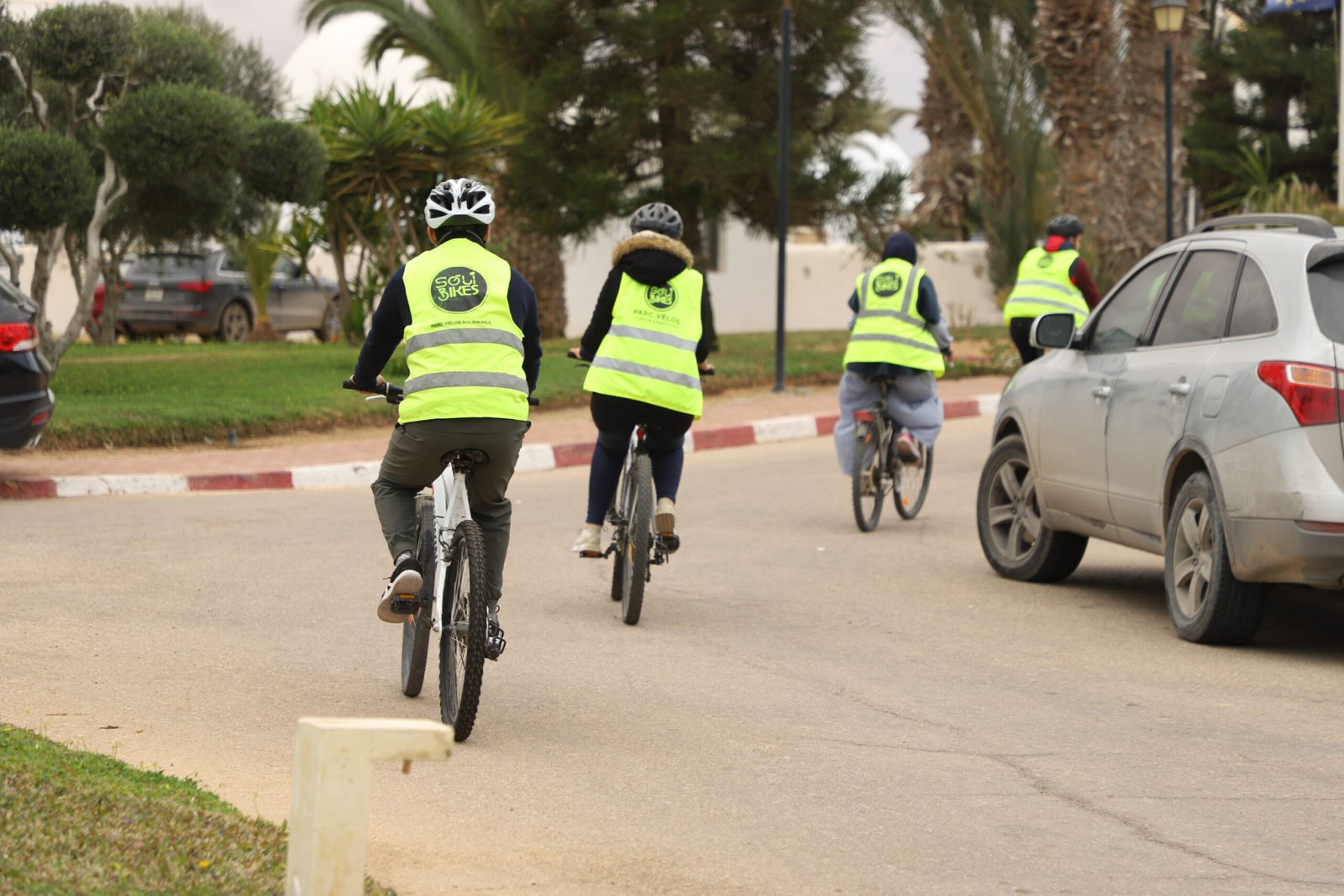
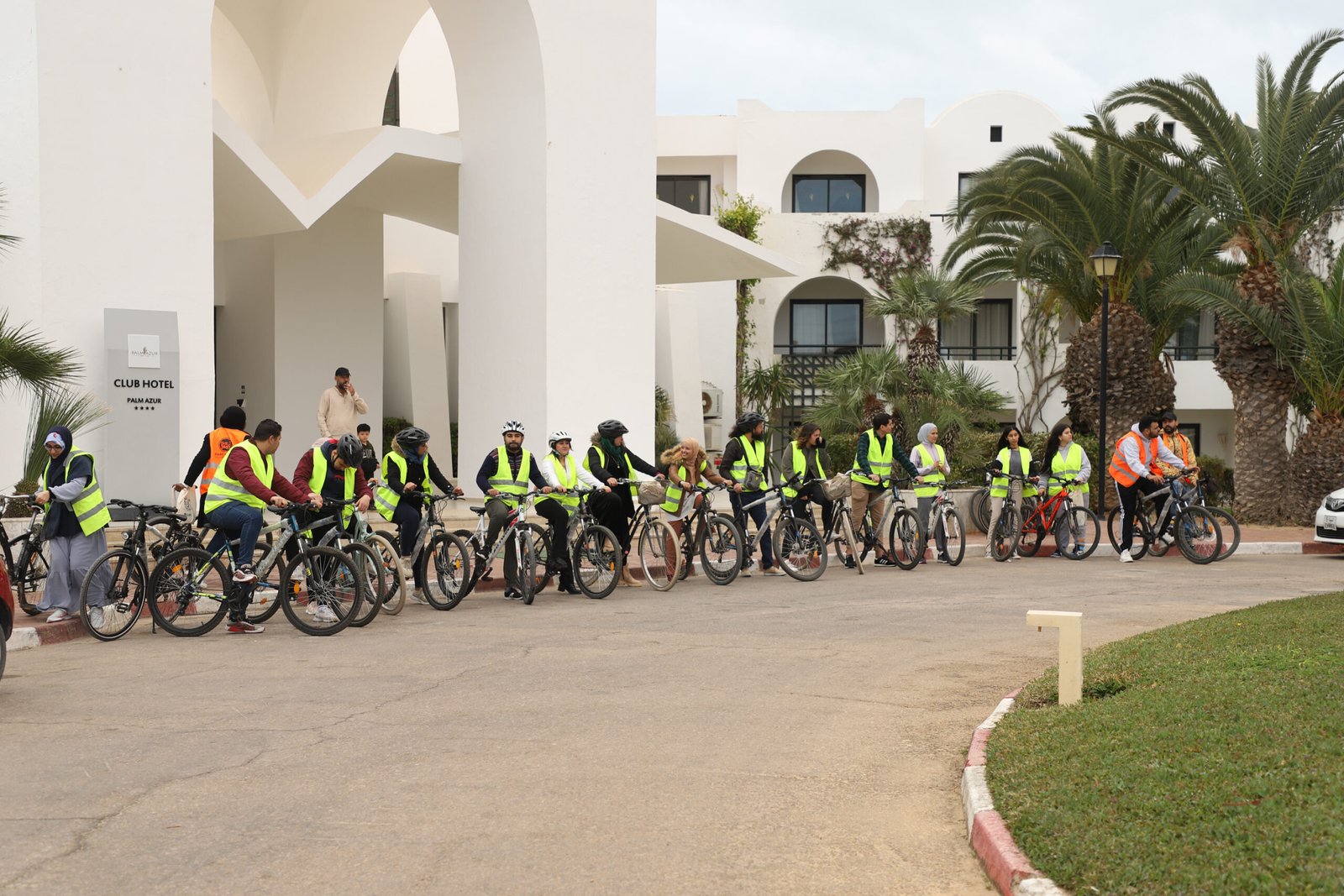
Experts have quickly realized that, in addition to other changes, transport systems must be updated to become climate change-proof. In Djerba, one initiative is transforming cycling from a simple recreational activity to a practical solution in combating climate change. Through its Enviro-Bike project, “Djerba Insolite” Association is working with youth, local associations, and tourism partners to promote bicycles as an eco-friendly mode of transport. Concurrently, this initiative aims to build awareness around climate change and the importance of protecting the island’s environment.
While preventing climate change involves introducing new infrastructure, changing habits, strengthening local capacity, and creating alternatives that work in the local context are equally needed. In this context, “Djerba Insolite” team created bike repair workshops, where they taught 66 young participants essential bicycle maintenance knowledge, enabling cycling to become a daily part of their lives. 52 of the participants, all aged 10-22, affirmed that they learned new bike repair skills, while a majority expressed their intent to incorporate cycling into their daily routines. These numbers reveal that cycling can become part of the larger culture of Djerba, which can help lower emissions and protect the fragile environment.
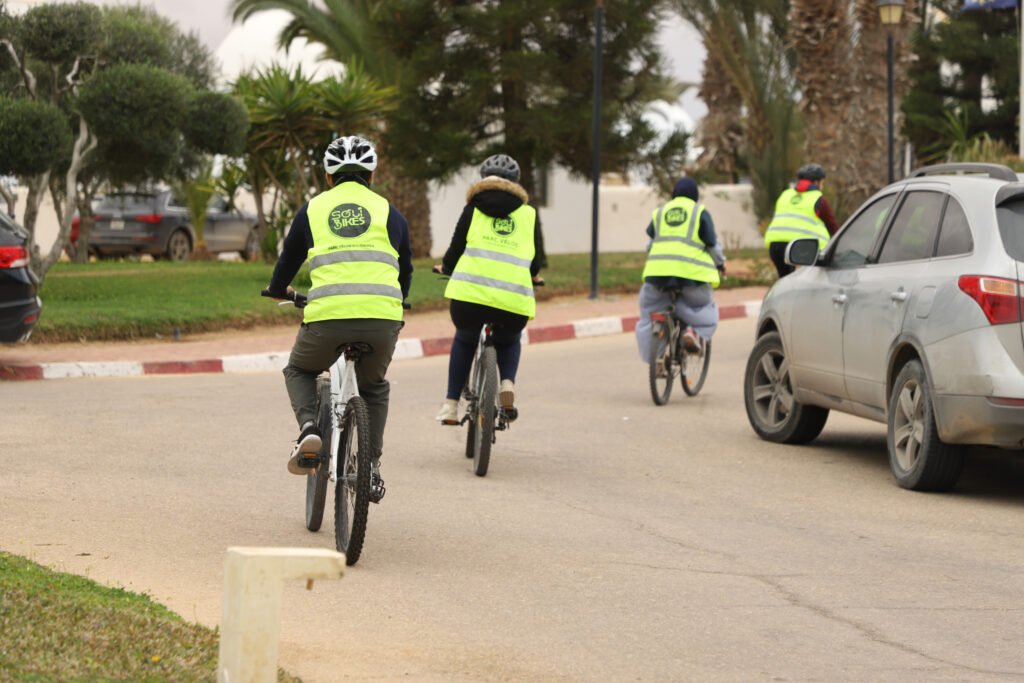
To make cycling more accessible and sustainable, the project established three bike rental stations in Ajim, Midoun, and Mezraya, three subregions of Djerba, each equipped with six bicycles and supported by local partners through formal agreements. These stations were an instant success, averaging more than 15 rentals per week, and proving that communities and visitors alike are ready to embrace a cleaner and more resilient mobility option. As the number of stations and bikes increase, so will the ability of more Tunisians to choose this clean option.
The project also connected cycling to climate awareness through workshops, public sessions, murals, and a photo exhibition that reached hundreds of people. One of the strongest outcomes was the involvement of young advocates who became more confident in discussing climate impacts and local solutions, proving that awareness can lead to real behavioral change and stronger community ownership. And as Djerba, situated on the front lines of climate change, continues to struggle with a rapidly warming planet, the ability of these advocates to promote substantial solutions is only growing in importance.