
Turning Climate Awareness into Action: Achref Chibani on Tunisia’s Transport Future
Tunisia’s MURUNAMed Focal Point explains why climate adaptation must become a standard part of transport planning—and what he hopes the project will achieve.
For Achref Chibani, Tunisia’s Focal Point for the MURUNAMed initiative, the question is no longer whether climate change will affect the country’s transport system. Its effects are already visible.
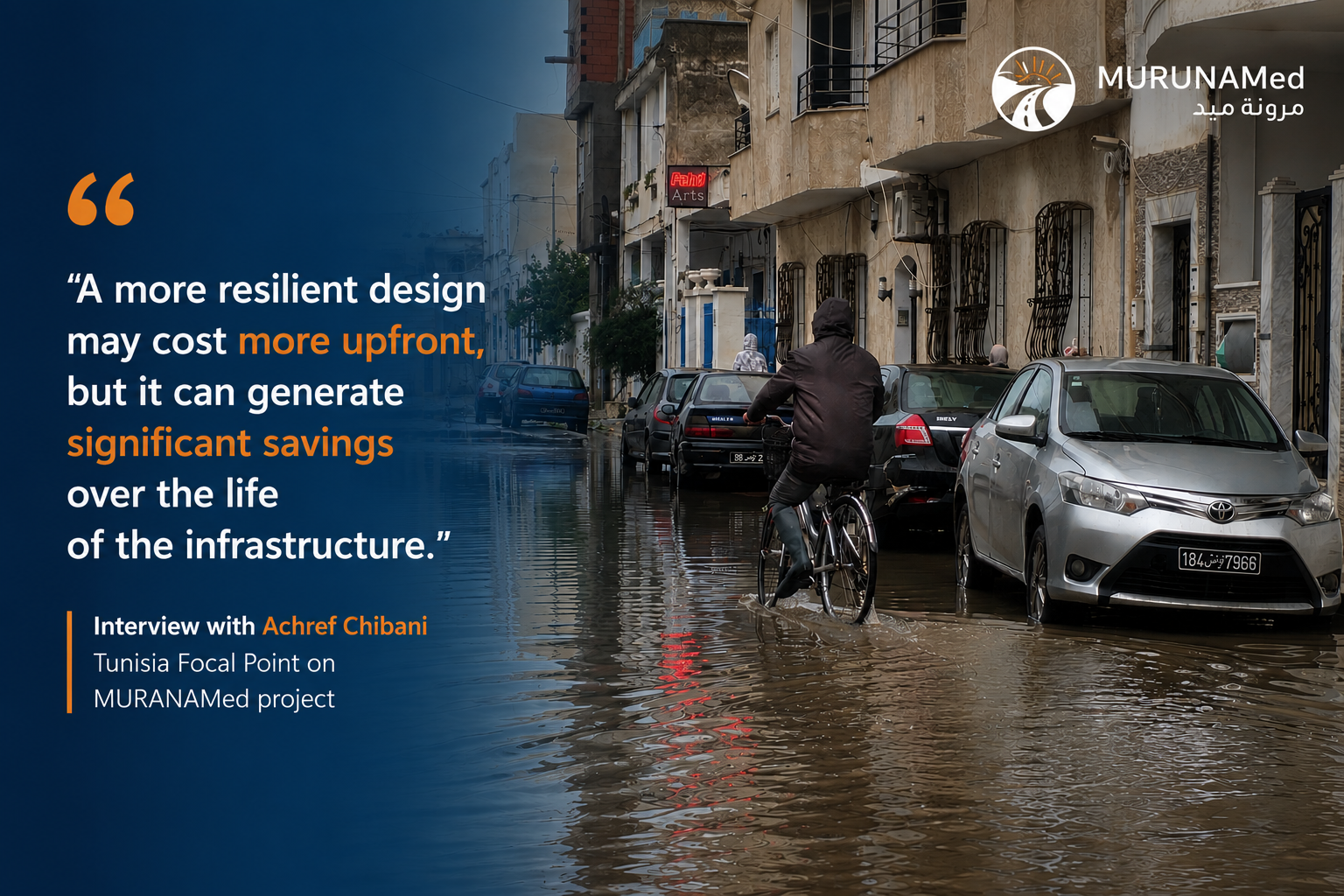
Flooding is interrupting mobility, extreme temperatures are increasing maintenance requirements and coastal hazards are placing strategic infrastructure under growing pressure.
“We have already moved beyond the point where climate adaptation can be considered a long-term concern,” he says. “The disruption is happening now.”
The challenge is not only physical. Tunisia must also strengthen the way climate risks are understood, prioritised and incorporated into transport decisions.
Moving beyond emergency repairs
One of Tunisia’s most pressing challenges is its reliance on reactive maintenance. When floods or other extreme events damage transport infrastructure, public funding must be redirected towards urgent repairs.
This restores services in the short term but leaves fewer resources available for measures that could prevent similar failures in the future.
Achref believes resilience must be considered at the beginning of the planning process. Planning and design studies for roads, bridges, railway lines and drainage systems should incorporate up-to-date climate and hydrological data, rather than relying solely on historical climate patterns
The same principle should guide maintenance. Instead of allocating resources mainly in response to recent damage, transport authorities could use risk information to identify the assets and corridors most likely to fail.
“A more resilient design may cost more upfront,” Achref says, “but it can generate significant savings over the life of the infrastructure.”
Building a stronger evidence base
Detailed vulnerability assessments and climate-risk mapping will be essential to this shift.
Authorities may know that flooding, heat or coastal erosion present a general threat without knowing which individual assets should be prioritised. More granular information would allow investments to be based on both the probability of failure and its potential consequences.
For example, a relatively quiet road may provide the only connection between a rural community and a hospital, market or essential service. Its social importance may therefore make it a higher priority than a busier route with several alternatives.
Better evidence could also strengthen Tunisia’s access to international climate finance. Development partners increasingly expect investment proposals to explain which climate risks will be addressed and how the intervention will protect communities and economic activity.
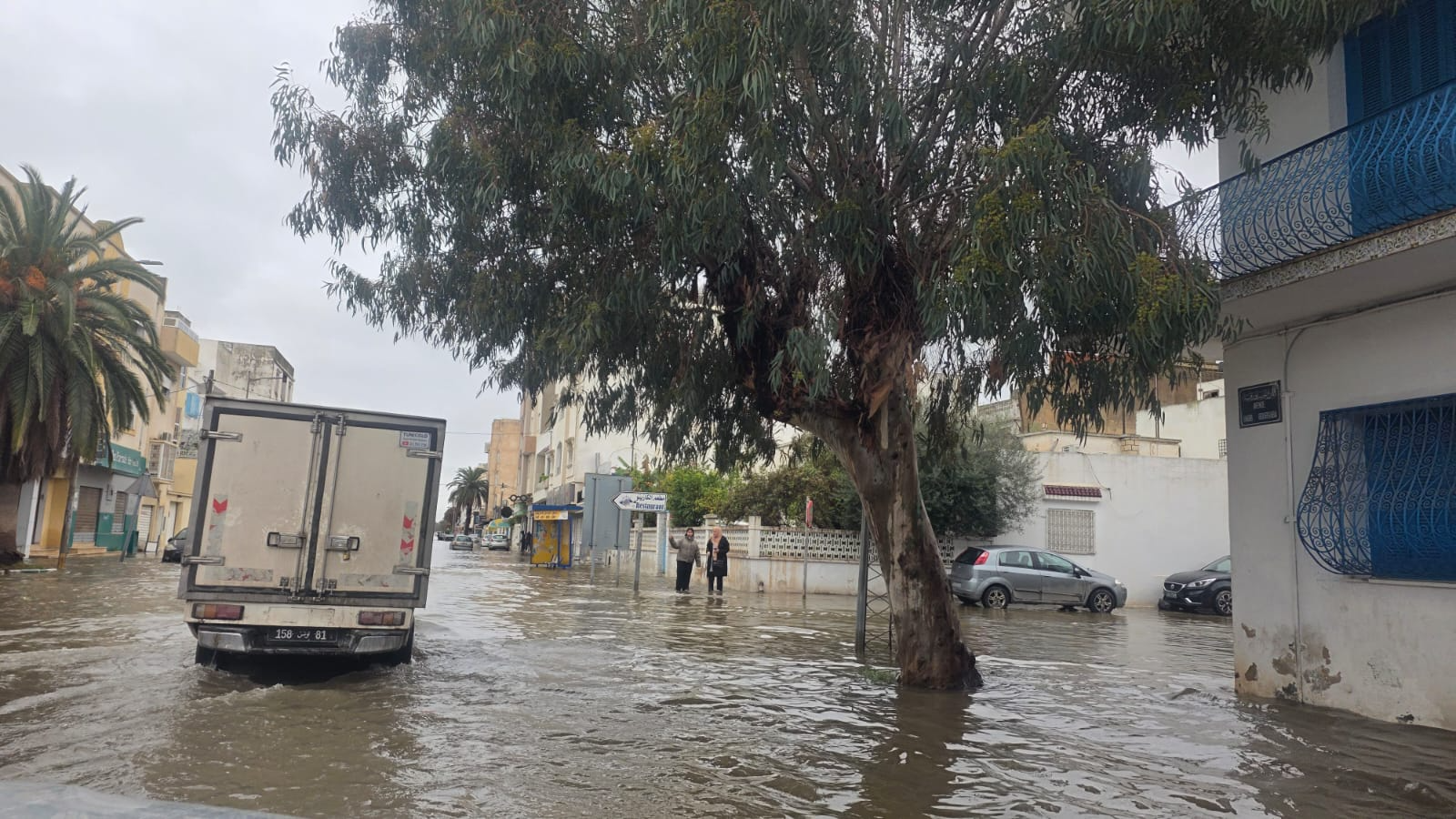
Source: Lilia Blaise
Making coordination a permanent practice
Achref sees coordination as one of the areas with the greatest potential for improvement.
Climate-resilient transport requires contributions from national authorities, municipalities, infrastructure operators, researchers, businesses and local communities. Each holds different information and responsibilities.
Municipalities may know where flooding occurs repeatedly. Operators understand the performance of individual assets. Researchers can provide climate projections and technical analysis. Communities know which connections are essential to everyday life.
The aim should be to create durable mechanisms for sharing this information and coordinating investment—not to rely on occasional consultations organised around individual projects.
“No single ministry, municipality or infrastructure operator can deliver transport resilience alone,” Achref says.
Learning from across the Mediterranean
Tunisia is not facing these pressures in isolation. Countries across the Southern and Eastern Mediterranean are experiencing rising temperatures, changing rainfall patterns and increasing coastal risks.
Achref sees opportunities to develop shared approaches to climate-risk assessments, engineering standards and professional training. Regional cooperation could also support joint approaches to coastal protection and the resilience of ports and international corridors.
Pooling knowledge would allow countries to learn from each other rather than developing similar methodologies and tools separately. It could also improve access to specialised expertise and international financing.
What MURUNAMed should deliver
MURUNAMed offers Tunisia and its regional partners an opportunity to turn awareness of climate risks into practical action.
By 2028, Achref hopes Tunisia will have a clearer understanding of which transport assets and corridors are most vulnerable. He also wants climate resilience to become a routine element of transport planning and investment appraisal.
It should no longer be treated as an optional environmental consideration added after the main technical and financial decisions have been made.
The project’s institutional legacy will be equally important. Achref hopes MURUNAMed will establish lasting working relationships between national authorities, municipalities, infrastructure operators, researchers and international partners.
These relationships, he stresses, must continue after the project ends.
Infrastructure designed today will remain in operation for decades, under climate conditions that may be very different from those for which older infrastructure was built. Delaying adaptation will not eliminate the costs, it may only increase them.
“The choice is not whether to invest in resilience,” Achref says, “but whether to do so proactively now.”