
Climate Resilience Starts Today: Fajr Wahba on Safeguarding Egypt’s Transport Future
From Mediterranean ports to busy urban streets, Egypt’s transport network is increasingly feeling the effects of climate change. As Egypt’s Focal Point for the MURUNAMed project, Fajr Wahba explains why adapting transport infrastructure is no longer a challenge for the future — but a priority for today.

Transport is the backbone of modern society. It connects people with jobs, schools and healthcare, supports businesses and trade, and keeps economies moving. But as climate change brings rising temperatures, heavier rainfall and more frequent extreme weather events, transport systems across the Mediterranean are under growing pressure.
For Egypt, those pressures are particularly acute. Stretching from the Mediterranean coastline to the Nile Delta, and home to one of the region’s largest transport networks, the country is already living with climate impacts that touch every mode of transport.
For Fajr Wahba, Egypt’s MURUNAMed Focal Point, no part of the system is immune.
“Every part of the transport system is exposed to climate risks in one way or another, but the type of risk really depends on where that infrastructure is and how it’s used.”.
Recent events have provided a stark reminder of those risks. In May 2025, an intense storm brought torrential rain and winds of up to 50 kilometres per hour to Alexandria. Several districts experienced flooding and traffic paralysis. Less than a year earlier, in June 2024, Aswan recorded a temperature of 49.6°C in the shade during an intense heatwave. Then, the following day, the temperature reached 50.9°C, setting a new all-time national record for Egypt.
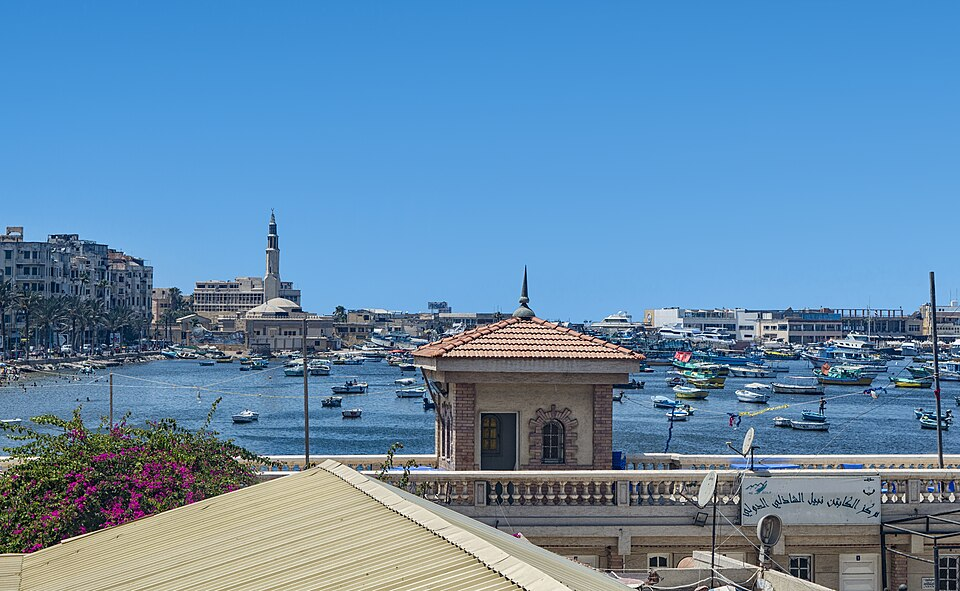
Source: Wikimedia Commonshttps://commons.wikimedia.org/wiki/File:Alexandria,_Egypt_(24446586458).jpg
.jpg)

For transport infrastructure, conditions like these matter. Ports along the Mediterranean coast face coastal flooding and rising sea levels. Roads in urban and low-lying areas can become impassable after intense rainfall, while prolonged heat can damage road surfaces and increase maintenance needs. Railway infrastructure is under similar pressure, making it increasingly important to consider climate resilience in planning, maintenance and future improvement programmes.
A connected Transport System
A recurring theme in Fajr’s thinking is that transport systems cannot be managed as a collection of isolated assets. A port may remain fully operational, but if the roads or railways connecting it to inland destinations go down, the entire logistics chain suffers. Resilience has to be approached at the system level.
The consequences reach well beyond infrastructure.
“When transport is disrupted,” Fajr explains, “people can struggle to reach hospitals, schools and workplaces, while businesses face delays, higher costs and interruptions throughout their supply chains.“
This is particularly important in a city such as Cairo, where transport patterns vary significantly across different population groups. A recent pilot household travel survey conducted as part of Mobility as a Service (MaaS) research found that private-car use dominated among its targeted sample, particularly higher-income and car-dependent households. While the study was not designed to represent travel patterns across Greater Cairo as a whole, it illustrates how access to transport options can vary considerably—and how climate-related disruptions may affect people differently depending on the alternatives available to them.
Communities with fewer transport alternatives are often the most affected — which means climate resilience is not only an infrastructure question, but a question of social equity too.
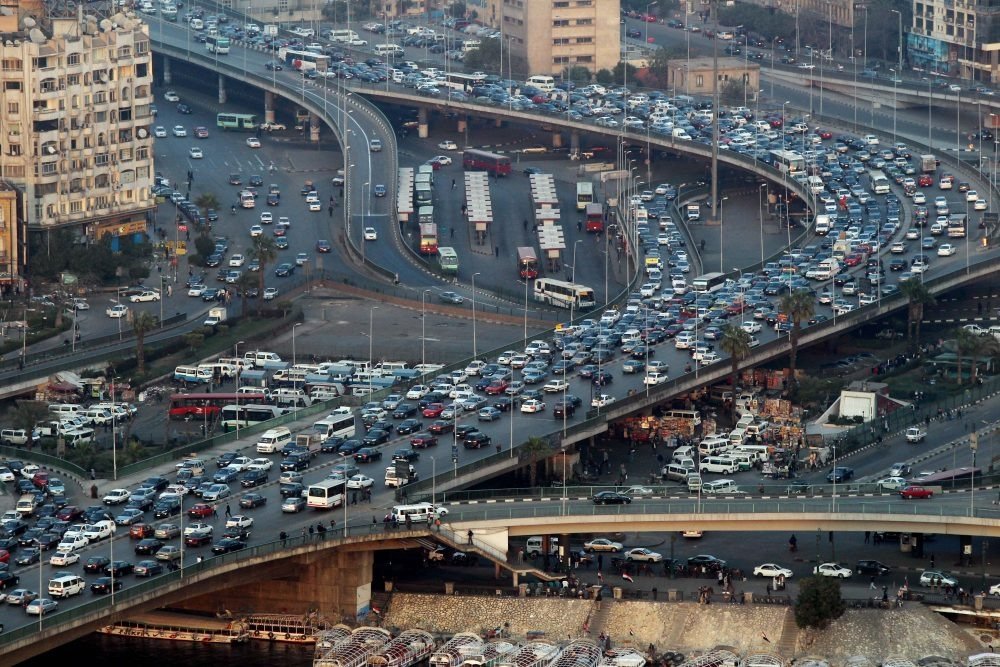
Source: Eaglenews
Better Decisions Start with Better Data
Recognising the risks is only the first step. Understanding where they are greatest is what allows governments to act effectively.
Fajr is clear on this point: vulnerability assessments and climate-risk mapping are essential. With limited resources, decision-makers need evidence to identify which assets are both most exposed and most critical. A road serving a hospital, a major port or an isolated community may deserve higher priority than another facing similar flood risks, simply because the cost of disruption is so much greater.
Forward-looking climate data matters here too. Infrastructure designed today must be built to withstand not the conditions of the past, but those of the decades ahead.
That means asking different questions at the planning stage. How will a road surface perform under more frequent extreme heat? Can drainage systems cope with heavier downpours? What happens to the wider network if a critical rail line, bridge or access road is temporarily unavailable?
Answering these questions early can help governments move from reacting to disruption to anticipating it.
Working together across institutions
Climate adaptation cannot be delivered by transport ministries working alone. Fajr is emphatic that meaningful progress depends on close, sustained cooperation — between national governments, local authorities, infrastructure operators, researchers and the private sector.
Each brings something different to the table: scientific evidence, engineering know-how, local knowledge, operational experience. In a country like Egypt, where transport networks connect cities, ports, agricultural regions and rural communities across vast distances, that kind of coordinated action is not optional — it is essential.
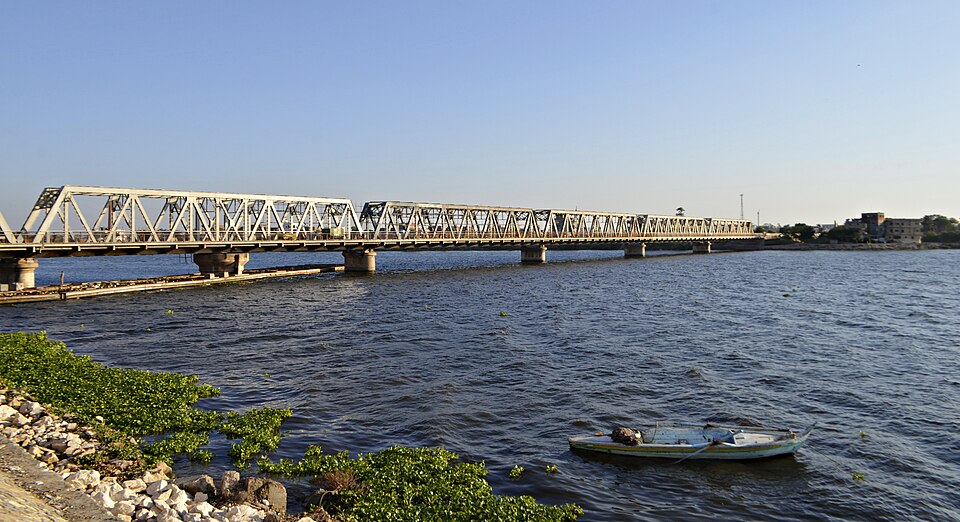
Source: Wikicommons Media

From Consultation to Genuine Collaboration
Effective adaptation also means involving stakeholders from the outset, not as an afterthought. Fajr draws a clear distinction between formal consultation exercises and real collaboration. Infrastructure operators understand the recurring problems on the ground. Researchers provide climate projections. Local authorities know their communities. And residents often identify vulnerabilities that technical data alone will miss.
Crucially, that engagement must actively include women, older people, people with disabilities, low-income communities and those in remote areas. Resilient transport systems are only truly resilient if they respond to real needs and improve accessibility and resilience for everyone.
Looking beyond 2028
For Fajr, the success of MURUNAMed will not be measured in reports or workshops. It will be measured by whether climate risk becomes an integral part of transport planning, investment and decision-making—not only in Egypt, but across the wider Mediterranean region
The project’s ambition is also to build lasting connections between transport authorities, researchers, climate institutions and infrastructure operators, so that countries facing similar challenges can keep learning from one another long after the project ends.
Act now, not later
Fajr’s message is direct. Climate adaptation is not something to plan for tomorrow.
Higher temperatures, heavier rainfall and more frequent extreme events are already reshaping transport systems today. Every road, railway, port or airport built now will need to perform under climate conditions that will keep evolving throughout its lifetime. The window for getting ahead of those changes is open — but it will not stay open indefinitely.
The encouraging news is that resilience does not always mean large-scale new infrastructure. Better drainage, updated engineering standards, stronger maintenance programmes, smarter monitoring — these are all changes that can make a real difference without requiring transformative investment.
The recent floods in Alexandria and extreme temperatures recorded in Aswan make the challenge tangible. But they also reinforce Fajr’s central point: action taken before disruption occurs is generally more effective—and often less costly—than responding after systems fail.
As Fajr concludes:
“Small changes made today can make a significant difference tomorrow.”